Motive power batteries

Test first. Replace only when it makes sense.

Lead-acid and lithium-ion forklift battery solutions supported by diagnostics, repair, reconditioning, replacement, and complete installation.

Compare technologies
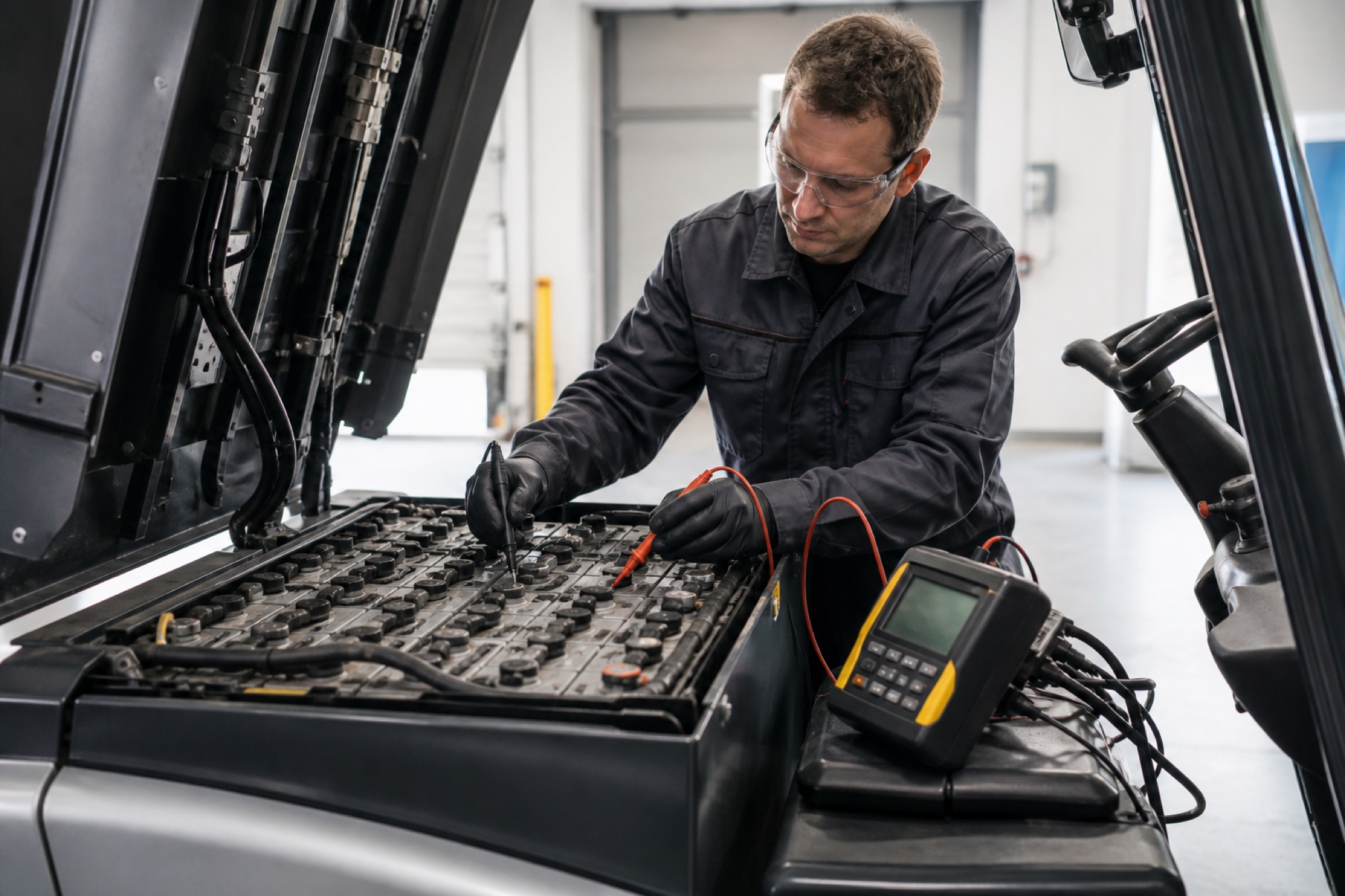
Technician performing diagnostic testing on a forklift motive-power battery

Evidence before expense

Know what the battery can actually deliver.

A weak truck does not automatically mean a failed battery. Charging problems, damaged connectors, individual cell issues, corrosion, and maintenance conditions can all reduce performance.

Our on-site testing evaluates capacity, voltage behavior, cell condition, and charge acceptance. You get a straight answer on whether the battery should be repaired, reconditioned, monitored, or replaced.

Battery technologies

Power matched to the duty cycle.

The best technology depends on shift length, charging windows, maintenance capability, truck compatibility, and total cost over the expected service life.

LA

Lead-acid batteries

Proven, serviceable motive power for operations with established charging and maintenance routines. A strong fit for many single- and multi-shift fleets.

24V–80VCommon voltage range
ServiceableCells and connectors
EstablishedProven technology
  • Broad forklift compatibility
  • Repair and reconditioning options
  • Requires watering and scheduled maintenance
  • Best with planned charge and cool-down time
LI

Lithium-ion batteries

High-efficiency power with fast and opportunity charging for operations that need continuous availability and minimal routine maintenance.

FastOpportunity charging
ZeroWatering required
Multi-shiftHigh-utilization fit
  • Consistent voltage through discharge
  • Short charging opportunities between tasks
  • Integrated battery management system
  • Higher upfront cost, lower maintenance demand

Battery services

Extend life where it makes economic sense.

Testing and repair can prevent unnecessary replacement, while proper installation protects the new investment.

01

On-site testing

Capacity, cell voltage, cable, connector, and charge-acceptance checks performed at your facility.

02

Repair & reconditioning

Cell replacement, terminal rebuilding, connector repair, cable work, and case refurbishment where appropriate.

03

Swap & installation

Old battery removal, replacement installation, charger compatibility verification, and final safe-operation check.

Preventable battery problems

Small issues become expensive downtime.

Heat, low electrolyte, damaged connectors, incorrect charging, and unbalanced cells reduce runtime and shorten battery life. A consistent inspection and maintenance routine helps catch those conditions earlier.

  • Longer charging time than normal
  • Truck slowing before the end of shift
  • Excessive heat during charge or discharge
  • Corrosion, damaged cables, or burned connectors
  • Strong odor, visible leakage, or damaged case
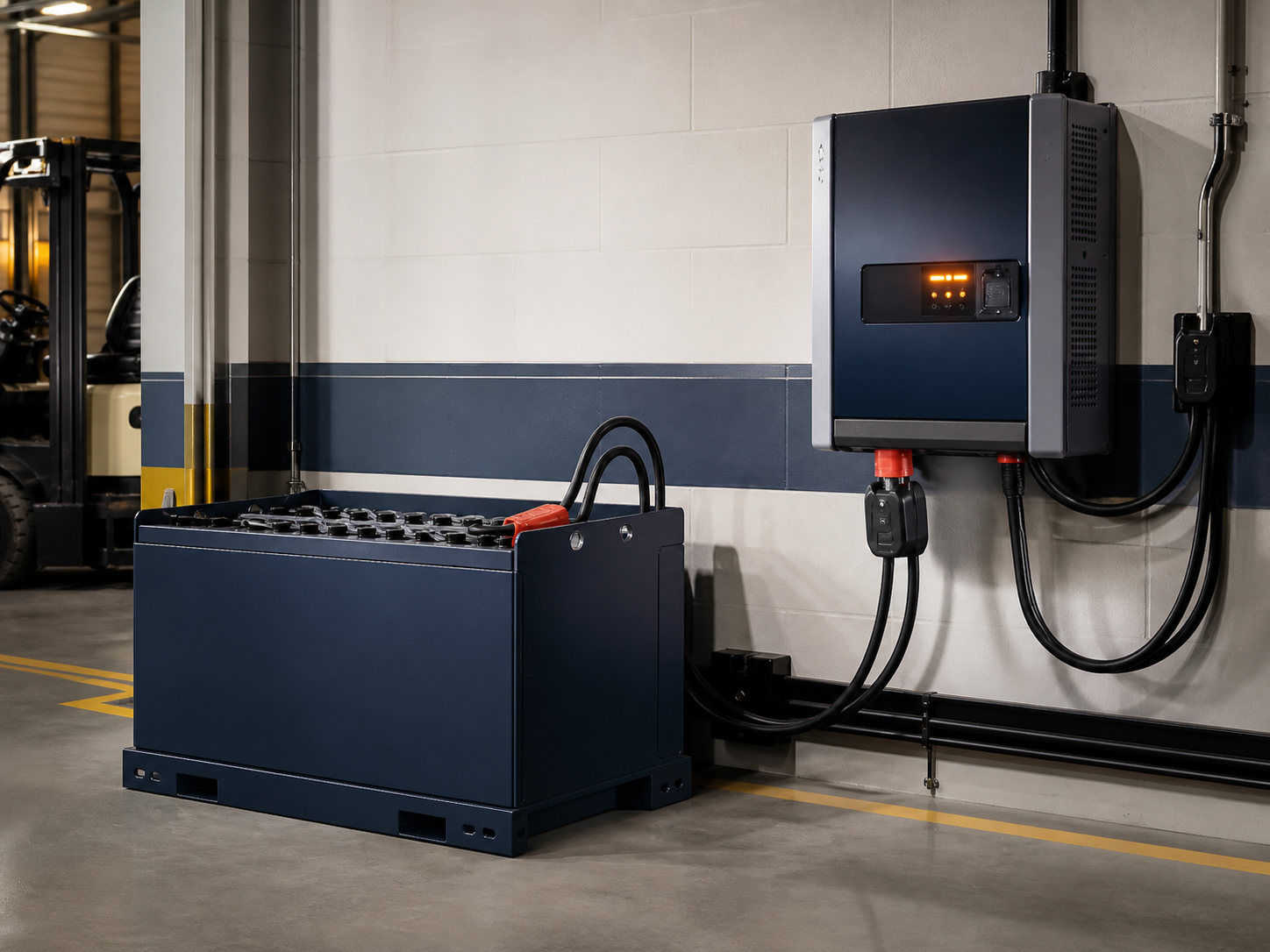
Industrial forklift battery connected to a charger

Battery FAQs

Make the power decision with confidence.

Can an industrial battery be repaired?

Often, yes. Cell, connector, terminal, cable, and case issues may be repairable. Testing determines whether repair is technically sound and financially sensible.

Should we switch from lead-acid to lithium-ion?

Lithium can be an excellent fit for multi-shift operations with limited charging windows, but truck compatibility, charger requirements, facility power, and usage must be reviewed first.

How long should a forklift battery last?

Service life varies with cycles, depth of discharge, temperature, charging practices, watering, and maintenance. Good operating discipline can materially extend useful life.

Not sure whether to repair or replace?

We test on-site and give you a straight answer.